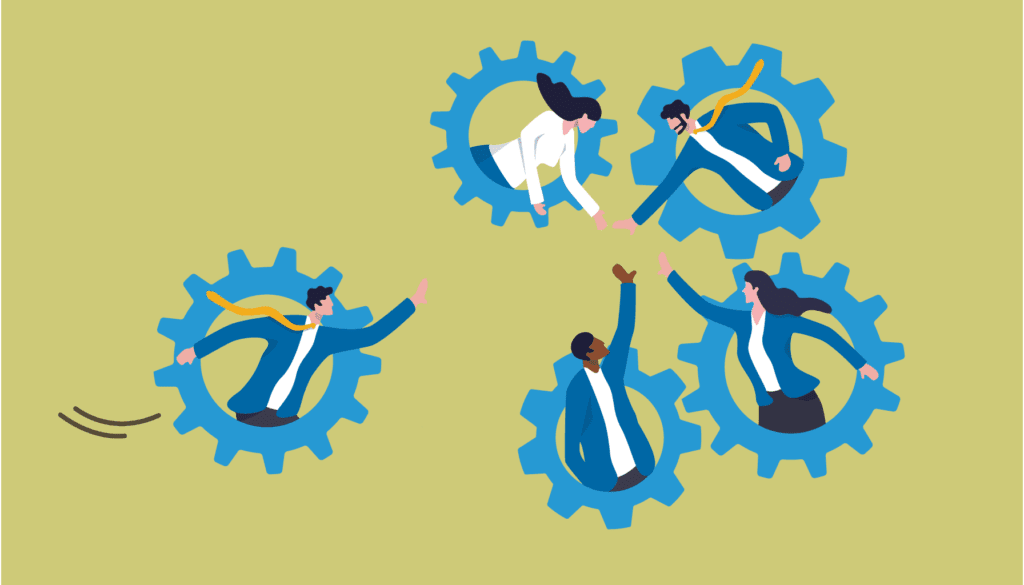
When you’re not the most senior person in the room, it’s easy to default to a supporting role: you wait to be asked, you take direction, you speak up only when you’re sure. But here’s the truth—if you want to be seen as leadership material, you have to start thinking like a peer before you have the title.
Thinking like a peer doesn’t mean overstepping or pretending you know everything. It means shifting how you show up: with ownership, strategic thinking, and a long-term view of the work—not just your task list. Here’s how to start acting like the colleague your leaders already want at the table.
You Focus on Outcomes, Not Just Execution
Task-oriented thinking asks, “What do I need to do?”
Peer-level thinking asks, “What are we trying to achieve?”When you understand the bigger goal behind a project, you make better decisions. You anticipate needs, solve problems proactively, and contribute ideas that move things forward. That shift—from completing work to shaping outcomes—is one of the clearest signs you’re operating at the next level.
You Offer Solutions, Not Just Problems
It’s easy to flag issues. It’s harder (and more valuable) to suggest next steps.
Thinking like a peer means you don’t just identify roadblocks—you come to the table with possible fixes, alternative paths, or at least a point of view. You don’t need to have all the answers. Just showing that you’ve thought it through earns trust fast.
You Think Cross-Functionally, Not Just About Your Role
The more you understand how your work affects others—other teams, customers, the bottom line—the more your input starts to matter.
Peers don’t just think about their department or job description. They ask questions like:
How will this impact other stakeholders?
Where could this create friction later?
What trade-offs are we making?
That kind of thinking turns you from a contributor into a collaborator—and that’s what leaders are looking for.
You Build Credibility with Consistency
You don’t need to “fake it till you make it” to be seen as a peer. In fact, trying too hard to sound senior can backfire. What does work? Doing what you say you’ll do. Showing up prepared. Asking smart questions. Following through—even on the boring stuff.
Credibility isn’t built in big moments. It’s built in the small ones, over time.
Final Thoughts:
If you want to be treated like a peer, start thinking like one. You don’t need permission to take ownership, offer insight, or act like a strategic partner. The title may come later—but the mindset shift starts now.
📌 What’s one way you could show up like a peer this week, even if your title doesn’t say “leader” yet?